
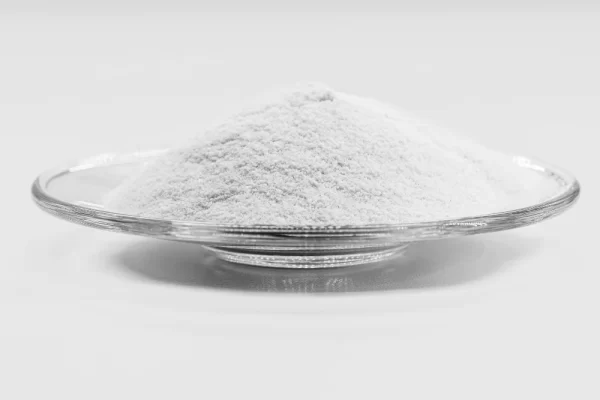
Calcium carbonate (CaCO3), as an important inorganic non-metallic material, is widely used in traditional industrial fields such as plastics, papermaking, coatings, rubber, and building materials due to its abundant sources, low cost, non-toxicity, harmlessness, and stable chemical properties.
However, ordinary calcium carbonate suffers from disadvantages such as poor dispersibility, weak compatibility with organic polymer materials, and limited functionality, which restrict its application in high-value-added fields. After deep processing through surface modification, particle size and morphology control, and functionalization and compounding techniques, the performance and value of calcium carbonate are significantly improved, successfully expanding its innovative application boundaries.
1. Nanoscale Calcium Carbonate Production Process
The preparation methods of nanoscale calcium carbonate are mainly divided into physical and chemical methods. Heavy nanoscale calcium carbonate is prepared by mechanical grinding; light or precipitated nanoscale calcium carbonate is prepared by chemical methods, which mainly include precipitation method, carbonation method, emulsion method, and sol-gel method, allowing for controllable crystal morphology.
Currently, the carbonation method is the main method for industrial production of nanoscale calcium carbonate. Its raw materials are widely available, mainly limestone with a high calcium carbonate content. The raw materials undergo calcination, digestion, carbonation, modification, dispersion, drying, and packaging to obtain the final product.
The most critical step in the preparation of nanoscale calcium carbonate by the carbonation method is the carbonation reaction. Based on the different contact methods between the Ca(OH)2 slurry and CO2, the carbonation method is divided into batch carbonation, multi-stage spray carbonation, and supergravity carbonation processes.
2. Heavy Calcium Carbonate Production Process
The production technology of heavy calcium carbonate mainly involves mineral processing, ore crushing, grinding and ultrafine grinding, and surface modification. Currently, there are four main processes for preparing heavy calcium carbonate on the market: the Raymond mill process, the ring roller mill process, the ball mill process, and the ultrafine vertical mill process. The characteristics of each process are as follows:
(1) Raymond Mill Process
Raymond mills mainly produce products below 325 mesh. Their working principle involves using suspended rollers on a central shaft, which rotate at high speed driven by a motor, generating compression and grinding forces. The material in the grinding zone undergoes compression, friction, and shear crushing, as well as intermittent impact crushing at low speeds.
(2) Ring Roller Mill Process
In the ring roller mill process, the material is fed into the gap between the grinding rollers and the grinding ring. Through the impact, compression, and grinding of the rollers and ring, the material is ground into powder. Compared to Raymond mills, ring roller mills have significant improvements in the grinding roller structure, resulting in higher grinding efficiency and better product particle size.
(3) Ball Mill Process
Ball mills grind materials through rotating balls. The material and grinding media impact and grind each other during the rotation of the ball mill. They produce a high yield of fine powder and have a large single-machine capacity. They can produce heavy calcium carbonate products of 600-6500 mesh, with a large single-machine production capacity, but they suffer from over-grinding and slightly higher energy consumption.
(4) Ultrafine Vertical Mill Process
The grinding mechanism of vertical mills also belongs to compression crushing. In ultrafine vertical mills, after the raw material is fed onto the grinding disc by a feeding device, the grinding disc rotates driven by a reducer, generating centrifugal force. The raw material moves towards the edge of the grinding disc and is ground in the grinding zone between the lower part of the grinding rollers and the upper part of the grinding disc liner. Three grinding rollers have a hydraulic system-controlled pressure device that applies constant grinding pressure downwards, causing the raw material to be ground between the grinding rollers and the grinding disc. Hydraulic control increases the grinding pressure of the rollers on the material, resulting in significantly better crushing efficiency than Raymond mills.
3. Calcium Carbonate Surface Modification Process
Surface modification is one of the most important deep processing technologies for calcium carbonate. In the past 10 years, the demand for surface-modified products has grown at a rate of approximately 10-15% per year.
The mainstream surface modification of calcium carbonate mainly uses organic coating and composite modification methods. Organic coating modification is a method of coating calcium carbonate powder with organic substances such as stearic acid and its salts, aluminate coupling agents, titanate coupling agents, and water-soluble polymers as surface coating/modifying agents. Currently, dry modification is the mainstream process for calcium carbonate.
The dry modification process involves dispersing the powder in a dry state or after drying in a surface modification equipment, while adding a prepared surface modifying agent, and performing surface modification at a certain temperature.
4. Innovative Applications of Calcium Carbonate
Currently, ultra-fine heavy calcium carbonate, modified heavy calcium carbonate, high-purity heavy calcium carbonate, and composite calcium carbonate are high-value-added products with great potential. In light calcium carbonate, modified nano-calcium carbonate, spherical calcium carbonate, porous calcium carbonate, calcium carbonate whiskers, and composite calcium carbonate are also high-value-added products with great potential. In specific applications, high-value-added products are emerging in plastics, papermaking, coatings, rubber, adhesives, medicine, food, and feed. In addition, in the fields of new energy materials, electronic information materials, environmental functional materials, and magnetic responsive materials, calcium carbonate is gradually demonstrating advantages such as safety, environmental friendliness, low cost, high purity, stable properties, and broad applicability.