
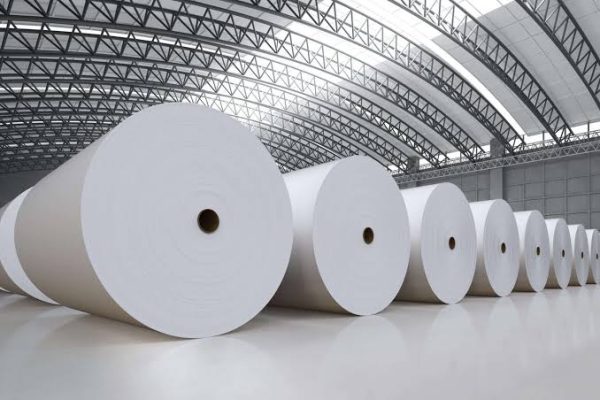
Calcium carbonate for the papermaking industry has evolved into a comprehensive product spectrum. It is categorized by production process into Ground Calcium Carbonate (GCC) and Precipitated Calcium Carbonate (PCC); by application into filler-grade and coating-grade; and by physical form into powder, slurry, or paste. Each variety offers distinct properties, tailored to the specific requirements of different paper types and manufacturing processes.
PART 01
Ground Calcium Carbonate (GCC): The Primary, High-Volume Filler
Ground Calcium Carbonate (GCC) is produced by crushing, grinding, and classifying natural minerals such as calcite or marble. It is the most widely used form of calcium carbonate in the papermaking industry, accounting for over 70% of the total calcium carbonate consumption. Characterized by low cost, high whiteness, excellent fluidity, low oil absorption, and strong process compatibility, GCC is primarily used as a filler for various types of paper and as a base-coat pigment for low-to-mid-grade coated papers.
PART 02
Precipitated Calcium Carbonate (PCC): A Key Component for High-End Coated and Specialty Papers
Precipitated Calcium Carbonate (PCC) is chemically synthesized via the carbonation process. It features finer particle size, a narrower particle size distribution, and superior whiteness—reaching as high as 95%–97%. Compared to GCC, PCC offers significantly better optical properties and opacity. Furthermore, its particle morphology can be precisely controlled; it can be synthesized into various crystal shapes—such as spindle, cubic, or acicular (needle-like)—to meet specific functional requirements. PCC is primarily used for top-coating high-end papers, as well as a filler for lightweight coated papers and specialty papers, effectively enhancing paper smoothness, gloss, and printability. Relative to GCC, PCC provides a finer particle size and improved bulk, resulting in superior opacity and stiffness. However, it entails higher production costs, exhibits a higher oil absorption value, and requires a greater dosage of sizing agents; consequently, it is predominantly utilized in mid-to-high-end paper grades. PART 03
Nano- and Ultrafine Calcium Carbonate: Directions for Functional Upgrading
Nano-scale and sub-micron calcium carbonate represent high-end categories of calcium-based additives for the papermaking industry. Characterized by finer particle sizes and larger specific surface areas, they significantly enhance the density and smoothness of paper coatings, while improving surface strength and print gloss. In high-gloss coated paper, art paper, and specialty coated papers, ultrafine/nano-calcium carbonate can partially replace titanium dioxide—maintaining essential opacity and gloss levels while reducing formulation costs. Furthermore, modified ultrafine calcium carbonate improves the abrasion resistance and surface strength of coatings, reducing issues such as dusting or surface picking during printing; this makes it well-suited for the rigorous demands of high-speed printing and high-end packaging applications.
PART 04
Product Forms and Supply Models
Beyond traditional powdered products, calcium carbonate in slurry form has become the mainstream supply model, catering to the continuous and clean production requirements of papermaking enterprises. High-concentration calcium carbonate slurries—with solid content reaching over 70%—offer excellent fluidity, are dust-free, and are easy to meter. They can be pumped directly into the production system, which significantly improves batching precision and operational efficiency while eliminating dust pollution. Consequently, this has become the preferred supply model for large-scale papermaking facilities.