
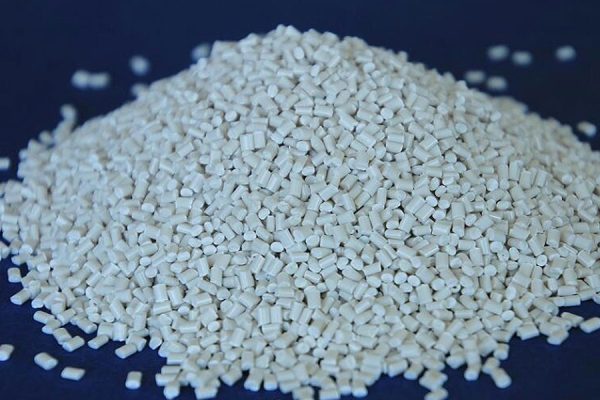
Calcium carbonate (CaCO₃) is a common inorganic compound. In nature, it exists in various forms, such as calcite, limestone, and marble. It is a major component of many rocks and minerals. Chemically, calcium carbonate decomposes into calcium oxide (CaO) and carbon dioxide (CO₂) at high temperatures. It can react with acids to produce the corresponding salts, carbon dioxide, and water. So, what role does calcium carbonate play in the plastics industry, and what are its limitations?
I. Improving the Strength and Rigidity of Plastic Products Calcium carbonate can be used to improve the mechanical properties of products, including rigidity, fracture resistance, tensile strength, and impact strength. For example, using calcium carbonate as a reinforcing agent in the manufacture of plastic films can improve their rigidity, significantly increasing film stiffness and facilitating smooth film curling. For aliphatic polyester films such as PBS, PLA, and PHA, the addition of calcium carbonate can improve isotropy, compensating for their high longitudinal strength but low transverse strength, and significantly improving tear resistance.
II. Enhancing Product Stability
Improving Dimensional Stability
During the processing of plastic products, internal stress may be generated due to uneven cooling or changes in processing conditions. Calcium carbonate has a low coefficient of thermal expansion (3.0×10⁻⁶/℃) and low thermal conductivity, exhibiting stable heat resistance. When added to plastics as a filler, it can act as a skeletal support, reducing the overall coefficient of thermal expansion of the composite material, minimizing internal stress and dimensional changes caused by temperature variations, thereby improving dimensional stability. Generally speaking, the dimensional stability effect of calcium carbonate is highly correlated with its morphology; spherical fillers are superior, while granular, flake, and fibrous fillers are slightly less effective.
III. Improving Surface Properties The surface tension of plastic films is one of their important physical properties, directly affecting secondary processing such as ink printing, coating adhesion, and bonding with other materials.
Generally, the surface tension of plastic films depends on their surface free energy. However, most plastic films, such as polyolefin films (LDPE, HDPE, LLDPE, PP), are non-polar polymers with low surface free energy and low surface wet tension, making it difficult for coatings to adhere. The addition of calcium carbonate can improve surface roughness, thereby increasing the surface tension of the composite material and imparting excellent adsorption properties. Therefore, it can improve the coatability and printability of the composite material.
IV. As a Pore-forming Agent
Calcium carbonate particles can be added to the polymer matrix as a “porogen”. This composite material is cast or blown into a film, and then stretched. This stretching can cause interfacial delamination between the polymer matrix and the calcium carbonate particles, creating tiny pores (about 0.01 to 10 μm), thus giving the film air-permeable and water-impermeable properties.
V. Enhancing Environmental Benefits
Smoke Suppression Effect: CaCO3 can react with hydrogen halides in smoke to form stable compounds such as CaCl2. Therefore, doping calcium carbonate into polymers that produce hydrogen halides during combustion, such as vinyl chloride, chlorosulfonated polyethylene, and chloroprene rubber, can achieve a good smoke suppression effect. Simultaneously, the tiny pores formed by calcium carbonate in the plastic increase the combustible surface area in contact with oxygen, helping to promote more complete combustion and reduce the release of black smoke.
VI. Enhancing Foaming Performance Calcium carbonate can act as a nucleating agent, adsorbing foaming gases to form tiny bubble nuclei in the polymer. It can also slow down melt deformation and movement, thereby inhibiting the rapid expansion of cells, resulting in finer cells, promoting foaming effect, and producing foamed plastics.