
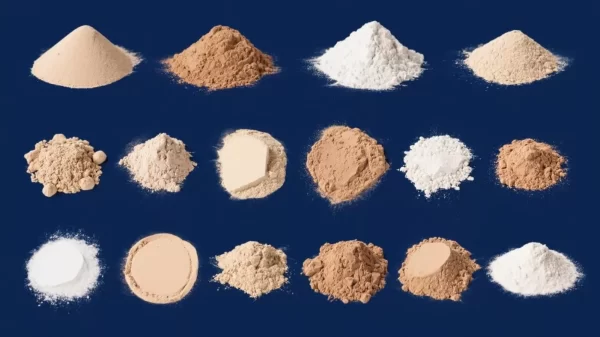
In short: whenever inorganic powders are added to organic polymers, they almost invariably require surface modification.
1. Which powders require modification? Mineral Powders: Heavy Calcium Carbonate, Light Calcium Carbonate, Nano Calcium Carbonate, Quartz Powder, Microsilica, Talc Powder, Kaolin, Bentonite, Mica Powder, Wollastonite, Dolomite Powder, Barite Powder, Precipitated Barium Sulfate, Nano Barium Sulfate, Diatomaceous Earth, Attapulgite, Sepiolite, Tourmaline Powder, Gypsum Powder, etc.;
Functional Powders: Titanium Dioxide (Titanium White), Iron Oxide Red, Iron Oxide Yellow, Iron Oxide Brown, Iron Black, Pearlescent Mica, Precipitated Silica, Carbon Black, Nano Zinc Oxide, Hollow Glass Microspheres, Calcium Sulfate Whiskers, Calcium Carbonate Whiskers, Activated Calcium Silicate, Flake Zinc Powder, Aluminum Tripolyphosphate Anti-rust Pigments, etc.;
Flame Retardant Powders: Magnesium Hydroxide, Aluminum Hydroxide, etc.;
Ceramic Powders: Aluminum Oxide, Zirconium Oxide, Aluminum Nitride, Silicon Nitride, Silicon Carbide, Barium Titanate, Strontium Titanate, Magnesium Titanate, Zinc Titanate Series, Cordierite, Forsterite Powder, etc.;
Magnetic Powders: NdFeB Magnetic Powder, Strontium Ferrite/Barium Ferrite, Fe-Si-Al (Sendust), Carbonyl Iron Powder (Soft Magnetic Powders), Nano Magnetite (Fe3O4), etc.;
Carbon Materials: Graphite, Graphene Powder, Carbon Fiber Powder, Carbon Nanotubes, etc.;
New Energy Powders: Ternary Cathode Materials, Lithium Iron Phosphate, Lithium Cobalt Oxide, Natural/Artificial Graphite, Silicon-based Anodes, Lithium Titanate, Boehmite, Lithium Hexafluorophosphate, Expandable Graphite, Zinc Borate, Silver Powder, etc.;
Metal Powders: Aluminum Powder, Zinc Powder, Copper Powder, Iron Powder, etc.;
Cosmetic Raw Materials: Silicon Dioxide, Titanium Dioxide, Zinc Oxide, Iron Oxide Red, Iron Oxide Yellow, Iron Oxide Black, Chrome Green, Ultramarine, Manganese Violet, Hydroxyapatite, etc.;
Thermally Conductive Fillers: Gold Powder, Silver Powder, Copper Powder, Tin Powder, Metal Nanowires, Aluminum Oxide, Hexagonal Boron Nitride, Silicon Carbide, Zinc Oxide, Nano-diamond, etc. Traditional Chinese Medicine (TCM) Powders: TCM powders suitable for tableting (including extract powders and raw herb powders).
2. Why is powder modification necessary?
Inorganic powders typically possess hydrophilic surfaces and strong polarity; consequently, they exhibit poor compatibility with organic matrices (such as plastics, rubber, and resins). Direct incorporation of unmodified powders leads to degraded material performance, making surface modification a mandatory requirement.
(1) Improve dispersibility and prevent agglomeration
(2) Enhance compatibility with organic matrices
(3) Strengthen interfacial bonding and boost mechanical properties
(4) Reduce oil absorption value and improve processing flowability
(5) Improve weather resistance, water resistance, and corrosion resistance
(6) Enhance electrical and thermal properties
(7) Improve surface gloss, tactile feel, and color consistency
(8) Prevent powder oxidation, spontaneous combustion, and unwanted reactions
In summary: Surface modification enables powders to achieve superior dispersion, enhanced compatibility, stronger bonding, higher filler loading, reduced costs, and improved overall performance.